Colorful Butterfly Seamless Patterns
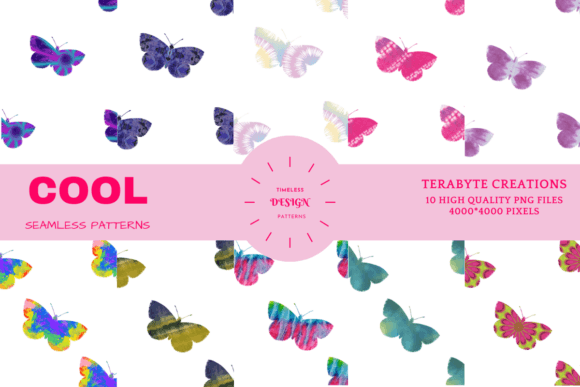
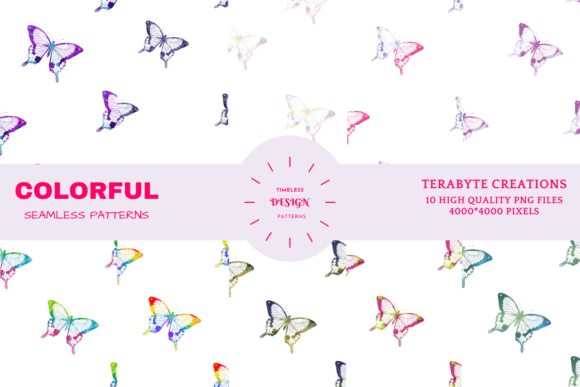
Imagine opening a digital folder and finding dozens of vibrant, intricately arranged butterflies—wings layered in jewel-toned blues, sunset oranges, soft lavenders, and emerald greens—each pattern flowing effortlessly into itself, edge to edge, with no visible seams or breaks. That’s the quiet magic of COLORFUL BUTTERFLY SEAMLESS PATTERNS: not just decoration, but living texture inspired by nature’s most delicate symmetry. These aren’t clipart repeats or flat vector abstractions. They’re hand-crafted surface designs where scale, spacing, and color balance feel intentional—not algorithmic.
Nature-Inspired, But Never Cliché
What sets these patterns apart isn’t just their vivid palette—it’s how the butterflies interact. Some designs feature overlapping wings that suggest motion; others use subtle transparency and layered gradients to create depth, as if light is catching real wing membranes. The linework stays clean but expressive—not overly technical, not cartoonish. There’s a gentle rhythm: no two adjacent butterflies face the same direction, no cluster feels accidental. That visual intelligence makes them feel *designed*, not assembled. They carry warmth and wonder without tipping into kitsch—a rare balance for nature-themed assets.
Where These Patterns Earn Their Keep
You’ll find COLORFUL BUTTERFLY SEAMLESS PATTERNS doing quiet, powerful work across real projects—not just “for inspiration,” but on shelves, screens, and stationery. A boutique skincare brand uses one variation as a foil for minimalist product labels: the contrast between organic pattern and crisp typography reinforces authenticity. A wedding planner layers a softer pastel version onto invitation suites, then repeats it subtly on napkins and envelope liners—creating cohesion without repetition fatigue. An indie publisher prints a bold, high-contrast variant on fabric-bound journal covers, turning functional objects into tactile keepsakes.
They also hold up beautifully in environments where scale shifts dramatically. At 4000×4000 pixels, they’re sharp enough for large-format wall murals or fabric yardage, yet retain clarity when scaled down to business card backgrounds or social media banners. Because they’re true seamless repeats, you can tile them across irregular surfaces—curved furniture panels, cylindrical packaging, or even ceramic mugs—without awkward edges or alignment headaches.
Practical Fit, Not Just Aesthetic Appeal
Before dropping a pattern into your next project, ask two questions: What feeling do I want this surface to evoke? and How much visual weight can the surrounding elements carry? A dense, kaleidoscopic butterfly repeat works brilliantly as a duvet cover or event backdrop—but would overwhelm fine stationery or a clean tech brand’s website header. In those cases, opt for a looser arrangement with more negative space, or use the pattern at low opacity as an underlay.
For branding applications, consistency matters more than variety. Pick one core pattern—and maybe one complementary monochrome or tone-on-tone variant—to anchor your visual system. That way, whether it appears on a woven tote bag, a PDF newsletter header, or a trade show banner, it reads as part of the same language. And because these are JPG files (not vectors), always preview them at actual output size—especially for fabric printing, where pixel density affects color bleed and detail fidelity.
Real-World Pairings That Just Work
These patterns thrive alongside typefaces that respect their organic energy without competing. For editorial layouts or packaging, try pairing with a warm, humanist sans serif like FF Meta or Proxima Nova—their open counters and friendly proportions let the butterflies breathe. On wedding stationery, a restrained serif like Adobe Garamond or Recoleta adds gravitas while letting the pattern remain the emotional centerpiece. Avoid tightly spaced, ultra-thin fonts or aggressive display serifs—they clash with the pattern’s inherent softness.
If you’re designing for digital use—think Instagram story templates or email headers—test how the pattern behaves against text overlays. A mid-tone butterfly repeat often provides better contrast than ultra-bright versions. And remember: seamless doesn’t mean invisible. Use subtle drop shadows or semi-transparent masks behind text blocks to ensure legibility without flattening the design’s dimensionality.
Licensing, Flexibility, and What You Actually Get
Each download includes high-resolution JPG files—no subscriptions, no watermarks, no usage caps. You’re free to apply them commercially: print them on apparel sold via Etsy, embed them in client pitch decks, use them as repeating backgrounds in Canva templates, or license them as part of a larger design package. There’s no need to credit the source (though many designers do, quietly, in project notes). What you won’t get is physical swatches, Pantone guides, or AI-generated variations—just what was described: 4000×4000 pixel seamless repeats, ready to drop into Photoshop, Illustrator, Procreate, or your favorite fabric printer’s upload portal.
This isn’t about chasing trends. It’s about having a reliable, emotionally resonant tool in your kit—one that speaks to people who notice the curve of a wing, the shift in iridescence at different angles, the quiet joy of natural repetition. Whether you’re launching a small-batch candle line, designing a children’s book interior, updating your blog’s seasonal header, or refreshing your studio’s proposal templates, COLORFUL BUTTERFLY SEAMLESS PATTERNS offer grounded beauty—not decoration for decoration’s sake, but texture with intention.
- Use them on fabric for scarves, pillow covers, or table linens—no seam lines to interrupt the flow
- Apply them to packaging boxes, gift tags, or sticker sheets with confidence in color fidelity
- Integrate them into editorial spreads where visual rhythm supports narrative pacing
- Layer them beneath transparent UI elements in web or app mockups for depth without distraction
- Print them on wallpaper or removable decals for temporary retail displays or home accents