Decorative Seamless Vector Patterns for Real-World Creative Work
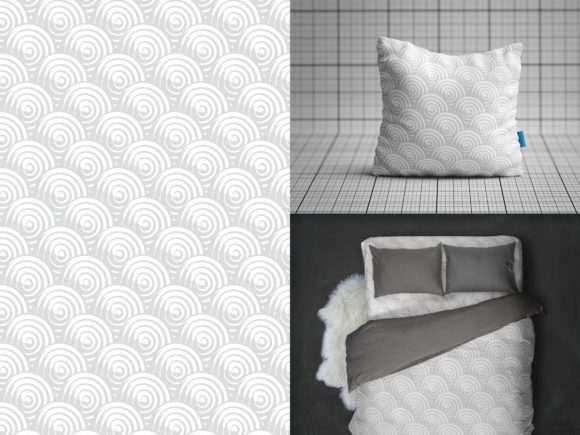
Decorative Seamless Vector Patterns are not just another collection of background assets—they’re a practical, production-ready toolkit built for designers and makers who need consistency, flexibility, and professional-grade output across diverse applications. At its core, this set delivers a curated selection of grey and white minimalist stylish circle backgrounds designed with precision: clean geometry, balanced negative space, and intentional repetition that avoids visual fatigue. Unlike raster-based repeats or low-resolution tiles, these patterns are fully vector-based—meaning they scale infinitely without quality loss, integrate smoothly into layered workflows, and adapt cleanly to both print and digital environments.
What Makes These Patterns Stand Out in Practice
The strength of Decorative Seamless Vector Patterns lies in how thoughtfully the design constraints support real use cases. The grey-and-white palette isn’t arbitrary—it’s calibrated for versatility. It works equally well as subtle stationery texture, elevated fashion textile motif, or refined wallpaper base. The circle motif is simple but deliberate: it reads as modern without being trendy, structured without feeling rigid, and organic enough to soften otherwise stark layouts. Because each pattern is truly seamless—no visible seams, no misaligned edges, no awkward transitions—it holds up under close inspection, whether printed at business-card size or scaled to cover an entire wall.
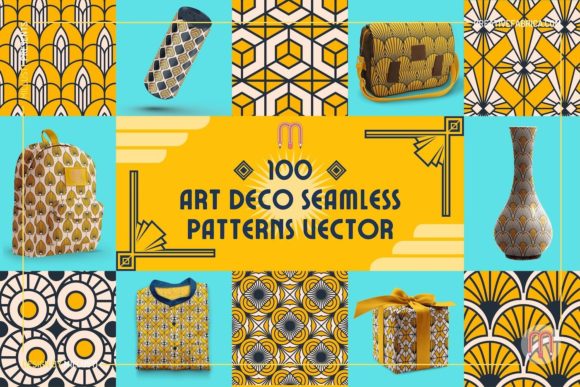
Each pattern arrives pre-sized and editable, eliminating guesswork during implementation. You’re not handed a single oversized tile and expected to crop or re-tile manually. Instead, you get 100 individual vectors, each already optimized for common dimensions and aspect ratios used in scrapbooking, greeting cards, fabric printing, and packaging. That saves time—not just in initial setup, but in revisions. If a client requests a lighter grey tone or tighter spacing, you adjust one element and propagate the change across all instances, rather than rebuilding from scratch.
File Structure and Workflow Integration
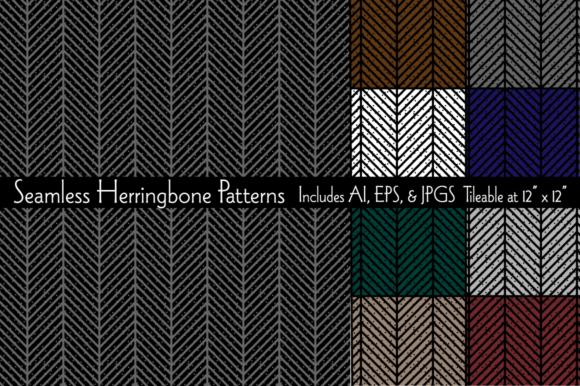
The inclusion of EPS files alongside JPG previews reflects a clear understanding of professional production pipelines. EPS remains a reliable, widely supported format for print vendors, especially in packaging, textiles, and commercial print shops where PDF/X-1a or legacy RIP systems are still in use. Layered AI files mean you can isolate elements—backgrounds, accent shapes, or alignment guides—without destructive flattening. This matters when adapting a pattern for embroidery digitizing (where stitch density depends on shape layering) or when preparing files for foil stamping (where registration between layers must be exact).
JPG previews serve a quieter but essential role: quick visual reference during client presentations or mood board assembly. You don’t need to open Illustrator to confirm which pattern matches a brand’s tone. That small efficiency compounds over dozens of projects—especially for freelancers juggling multiple clients or educators preparing classroom materials on tight deadlines.
Color Flexibility Without Compromise
“Unlimited color variations” isn’t marketing hyperbole here—it’s a direct result of vector construction and intelligent grouping. Since strokes and fills are separated by layer and object, swapping a base grey for charcoal, warm taupe, or soft blush takes seconds—not hours. No pixelation, no banding, no re-rasterization. And because the patterns avoid gradients or transparency effects that complicate spot-color separation, they translate reliably to screen printing, CMYK offset, and even Pantone-matched fabric dyeing.
This flexibility extends beyond hue. You can adjust stroke weight to shift emphasis—thinner lines for delicate stationery, bolder outlines for fabric motifs meant to read at arm’s length. You can also toggle visibility of secondary elements (like inner concentric rings or micro-dots) to create hierarchy within the same base pattern. That kind of granular control supports iterative design thinking, not just one-off decoration.
Who Benefits Most—and Where It Fits Best
Small business owners creating branded packaging will find immediate value in the consistency these patterns provide. A single seamless vector can unify business cards, tissue paper, and product tags—reinforcing visual identity without requiring custom illustration for each item. Scrapbookers appreciate the clean, non-distracting nature of the circles; they frame photos and journaling without competing for attention, yet add enough structure to prevent layouts from feeling flat or generic.
Fashion designers using digital textile printing benefit from the predictable repeat behavior. Unlike hand-drawn repeats that may warp or drift at scale, these vectors maintain exact spacing and alignment across yardage—even when stretched to 50+ inches wide. Educators developing printable worksheets or presentation templates rely on the neutral palette to ensure readability for diverse learners, including those with visual processing sensitivities.
Bloggers and content creators producing downloadable resources (e.g., planner pages, social media templates, Canva-compatible kits) gain efficiency: the EPS + JPG combo allows them to offer both editable source files and ready-to-use PNGs without managing separate raster exports.
Realistic Considerations and Limitations
While highly adaptable, Decorative Seamless Vector Patterns aren’t a universal solution. They excel in contexts where subtlety, cohesion, and scalability matter—but they won’t replace expressive hand-lettered textures, photorealistic overlays, or complex illustrative repeats. If your project demands strong narrative or emotional resonance—say, a children’s book cover or activist campaign poster—these minimalist circles may feel too restrained.
Also worth noting: the focus on grey and white means users needing high-contrast black/white or vibrant color palettes will need to recolor intentionally. That’s not a flaw—it’s a feature. But it does require basic vector literacy. Someone unfamiliar with fill/stroke management in Illustrator may spend more time learning than implementing. For absolute beginners, pairing this set with a short workflow guide (e.g., “How to Recolor a Vector Pattern in 3 Steps”) would improve accessibility.
Finally, while the 100 patterns offer breadth, they prioritize refinement over quantity. You won’t find chaotic kaleidoscopes or dense Moroccan tiles here. That’s intentional—and valuable—for users prioritizing calm, clarity, and coherence. But if your work regularly calls for maximalist or culturally specific motifs, this collection serves as a strong foundation layer, not a full stylistic library.
Long-Term Utility and Integration Potential
These patterns hold up over time—not just aesthetically, but technically. Because they’re built with standard vector primitives (ellipses, paths, compound shapes), they remain compatible across Illustrator versions, including newer cloud-based iterations. They also import cleanly into Affinity Designer and CorelDRAW with minimal adjustment—unlike assets relying on proprietary effects or plugins.
In practice, that means you can drop a pattern into a 2022 branding project and reuse the same file in a 2027 rebrand—no regeneration needed. You can build a style guide around one base circle pattern and evolve it across mediums: reduce opacity for watermarking, convert to halftone for retro packaging, or combine with line art for editorial illustrations. That kind of longevity reduces asset sprawl and supports sustainable creative practice.
For professionals managing multiple clients or evolving personal brands, Decorative Seamless Vector Patterns function less like disposable stock and more like a carefully chosen typeface or color system: quiet, reliable, and capable of carrying significant expressive weight when applied with intention.